PART-54
Chhathiara: A traditional celebration of a newborn's sixth day.
Lakshmi ji: Goddess of wealth, fortune, power, beauty, and fertility.
Char Dham Yatra: A pilgrimage in the Himalayas to four holy Hindu shrines in Uttarakhand, India: Yamunotri, Gangotri, Kedarnath, and Badrinath.
*-*-*
DING DONG! DING DONG! DING DONG!
"Ira!" Vaidehi's high-pitched voice echoed through the house. "See who's at the door, beta!"
"Okay!" Ira called back, storming out of her room. Her hair was a messy cloud around her face, the result of hours bent over her desk. Ink stains dotted her fingers and cheeks, and the faint crease on her forehead hadn't yet relaxed.
"Ow!" she hissed as her toe slammed into the iron threshold. She winced at the sharp sting, shaking her foot mid-run and muttering something under her breath before continuing toward the gallery.
The smell of festival sweets and various dishes lingered in the air. The doorbell's echo faded between the children's laughter outside, only to pierce the shallow stillness again.
Reaching the iron entrance door, she pulled it open, its hinges creaking in protest.
"HAPPY HOLI, CUTIE PIE!"
"Oh—whoa—oh!"
Ira's eyes squeezed shut as a burst of colour exploded across her face. A pair of quick, mischievous hands smeared pink and yellow gulal along her cheeks. The fine powder clung to her skin, its grainy texture feeling both soft and scratchy.
"Navya! That's not how you play with colours, beta. What if it went into her eyes?" A gentle, unfamiliar voice floated through the doorway.
Ira blinked rapidly, her eyes stinging slightly as she forced them open. Sunlight shimmered through the drifting gulal, giving everything a soft, pastel haze.
When her vision finally cleared, she saw Navya grinning beside a woman whose face shared the same lively features—likely her mother. The woman's saree was neatly pinned, her hair tied into a low bun. She held a cotton bag and a copper plate covered with a red cloth, the faint scent of something sweet escaping from beneath it.
Navya, meanwhile, looked like chaos wrapped in festivity—her face streaked with pink, green, blue, yellow, and orange. Her hair stuck out in every direction, her white teeth flashing through the colourful mess. She looked as though she had lived an entire lifetime of Holi in just one day.
"Sorry, sorry! I just got too excited." Navya bit her tongue and narrowed her eyes as she stepped closer. "You okay, Ira?" She tried wiping the colour off Ira's face, but her thumb only smeared the pink deeper into Ira's jawline, turning her apology into another burst of laughter.
Ira instinctively caught Navya's wrists, chuckling awkwardly. "Yeah, I'm fine... don't worry." Her now-clear eyes shifted toward the woman beside Navya. "Your mother?" she asked softly.
Navya nodded, beaming.
Ira immediately bowed her head, pressing her palm gently over her heart. "Pranam, aunty."
Navya's mother smiled warmly. "Khush raho, beta," she blessed her, her voice soft and motherly.
"Please come inside," Ira said, stepping aside and gesturing toward the gallery.
The woman entered carefully, balancing the copper plate and bag with both hands. Her saree rustled gently as she lifted it near her ankles to avoid tripping.
Behind her, Navya bounced forward and threw her arms around Ira, smearing the bright colours from her vibrant kurti all over Ira's clean white pyjamas.
"Hey!" Ira squealed, trying to wriggle free. "You ruined my clothes!"
"Oh, my girl!" Navya laughed, spinning away with mock pride. "Forget your clothes—guess what? Nidhi's in Patna! Safe and sound!"
Surprise flickered across Ira's face. "Really? Wow."
"Was that sarcasm?" Navya narrowed her eyes.
Ira narrowed hers right back. "No..."
"Navya! Ira! Come upstairs, beta!"
The girls exchanged a quick look and broke into matching chuckles.
💫💫💫💫💫💫💫💫
"Are you done preparing for the exam? Just about two months left," Ira asked as they climbed the stairs.
"What preparation?" Navya clapped her hands, releasing tiny clouds of coloured powder into the air. "I just need to mug up the entire guess paper. It's not like they actually teach us anything in college! Honestly, our college could be the perfect shooting location for a haunted movie."
"True," Ira sighed, her eyes following the last few steps before the landing.
From above, their mothers' laughter drifted down the staircase, echoing like an old, familiar memory.
As they entered the living room, Navya suddenly gasped. "You two know each other?!"
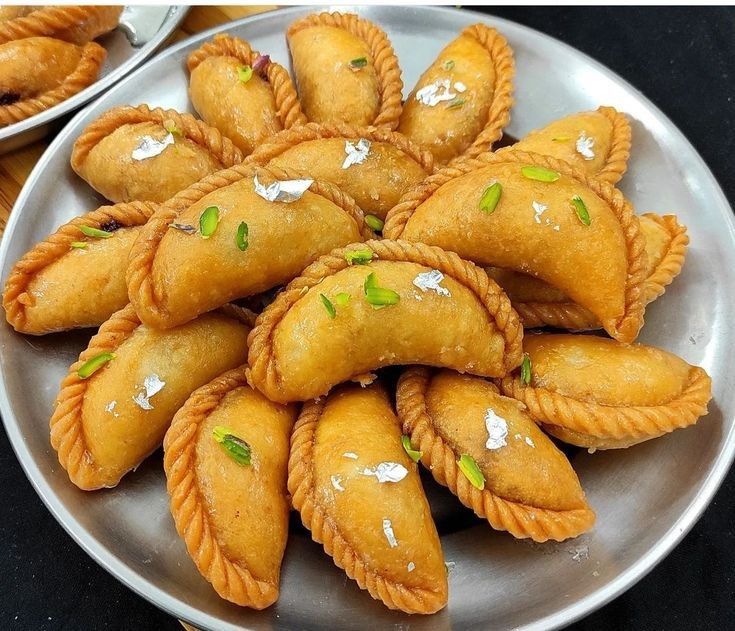
"Of course," Vaidehi replied with a warm laugh, holding out a plate piled high with golden, crescent-shaped gujiyas.
"Yeah," Navya's mother added, her face lighting up. "The moment you said—Vaidehi Kashyap aunty, doing her PhD; husband Raghav Kashyap, an advocate; a son and a daughter—it all clicked! How could I not remember?"
Her eyes lingered on Ira and Navya. "You two should learn from her. She's been working hard for nearly twenty years – managing the house, studying, taking exams – and never once backing down, even after all the unnecessary drama from family, relatives, and neighbours."
Ira lowered her gaze slightly, a shy smile tugging at her lips.
"And your son? Where is he? He was such a little boy the last time I saw him," Navya's mother asked with a fond chuckle, glancing at Vaidehi with curiosity.
"In his room, playing some game," Vaidehi replied with a helpless sigh, pointing toward a particular closed wooden door. "No matter how much I tell him—study, study, study—it all falls on deaf ears."
"Every house has the same story, Vaidehi ji," Navya's mother chuckled, her bangles clinking softly as she reached for a gujiya. She glanced sideways at her daughter, who was already stuffing one into her mouth, whispering something to Ira between muffled giggles. "One of my nephews owns a gaming company, and whenever a new game is launched, he immediately sends it to her."
"Rudraksh bhai loves me so much! He's the best!" Navya announced proudly, her voice slightly muffled as she spoke with her mouth full. She wiped the streaks of pink and yellow from the corners of her lips with the back of her hand, leaving faint smudges behind.
Vaidehi chuckled, wiping her hands on the edge of her saree before glancing over her shoulder. "Nakul! Come out, beta! See who's here!"
No reply.
"Switch off the Wi-Fi, then he'll come," Ira muttered, crossing her arms, her tone dry and unbothered.
Navya pressed her lips together, trying hard not to laugh. "That's not how you talk about your brother," she whispered.
"You don't know my brother. He's a demon in disguise," Ira shot back, twisting her lips.
"NAKUL!"
This time, the door creaked open with theatrical reluctance. Out stepped Nakul—medium tall and tousle-haired—blinking as though he'd been dragged out of a battlefield. His T-shirt was wrinkled, his hair sticking out at odd angles, and his phone was still clutched in his hand.
"Haan, what happened?" His voice carried a faint edge of irritation.
His gaze swept across the living room, pausing on the unfamiliar faces, before landing on the two colour-smeared girls giggling in the corner like identical troublemakers. His eyebrows shot up. "What are you—who are you two?!"
"Nakul..." Vaidehi's tone softened, her eyes flickering briefly toward the guest in a silent motherly warning.
"Oh." Nakul straightened immediately, putting his phone aside and stepping forward. He bent down and touched Navya's mother's feet with awkward sincerity.
"Khush rahiye," Navya's mother blessed him, smiling as she patted his head. Then, with affectionate precision, she placed a red tilak on his forehead. "Happy Holi, beta."
"Happy Holi," Nakul replied politely, a small, uncertain smile tugging at his lips. He took a pinch of coloured powder from the nearby plate and sprinkled it respectfully at her feet.
"Happy Holi from my side too!" Navya declared, bouncing forward like a burst of colour herself. Before Nakul could react, her hand—bright red with gulal—swept across his cheeks in one bold motion.
He froze, jaw slack, blinking as if someone had just slapped him with joy. His trimmed cheeks now bore a fiery streak on each side. He glanced at the two women, who were chuckling at his astonished expression.
"You can apply some on her as well. Holi is about forming new bonds and friendships," Navya's mother suggested warmly.
Nakul's face, already tinted red, carried a faint flush of pink. He turned to his mother, eyes wide with the silent question a child asks before doing something risky: Can I?
"Apply some," Vaidehi said, lifting her chin.
Nakul took a pinch of pink gulal and raised his hand toward Navya's face. His hand hovered near her chin as his gaze roamed over her already colourful features. A faint grin tugged at the corners of his mouth.
"She's already drenched in colours," he said with a soft chuckle. "Where will my colour even find its place?"
"If you apply it sincerely, it'll surely stay," Navya said with an easy shrug, raising her eyebrows.
From the corner, Ira leaned against the wall, yawning widely. She tapped her fingers against her mouth and murmured drowsily, "I want to sleep."
🍁🍁🍁🍁🍁🍁🍁🍁
The day passed just like that – no fun, no celebrations – only the quiet monotony of another ordinary day. Now, the wings of night had spread across the city, wrapping everything in a stillness that felt almost sentient.
Only the occasional hooter or the distant cries of reckless teenagers wandering after dusk broke through the silence. Even the moon seemed tired; after keeping vigil over the empty streets for half the night, it slipped behind a veil of thick grey clouds, perhaps searching for its own moment of rest.
So much was happening, and yet… nothing at all.
"Siddharth."
A mischievous gust from the nearby Kadamba tree carried Apoorva's calm voice to him, brushing gently against his face. His eyes closed on instinct, surrendering for a fleeting moment to the wind's touch. But the comfort it brought couldn’t loosen the weight of thoughts gripping his mind like a demon’s claws.
As the sound of his mother's footsteps drew nearer, he turned slowly. A faint smile rose to his lips, catching the moonlight now breaking through the thinning clouds.
"What happened?" she asked softly, extending a mug of herbal tea to him while keeping one for herself.
Siddharth lowered his head, eyes fixed on the steaming cup as he accepted it with his good hand, nodding quietly. "It doesn't feel like a festival, maa," he murmured.
Apoorva smiled faintly, nodding as she walked closer and leaned against the railing. Lifting the mug to her lips, she took a slow sip. The medicated warmth of tulsi and ginger soothed her thoughts, like a complex puzzle gently falling into place.
"And..." she said, turning to face him, her voice low. "Why is that?"
Siddharth gave a faint shrug. The cup warmed his fingers as he took a slow sip, letting the taste unfold on his tongue, eyes closing briefly as though listening to a memory rather than savoring the drink.
"Life gets... crowded as we grow," he said after a pause. "The excitement, the celebrations - they stay behind, folded somewhere in the pockets of childhood we forget along the way. In the race for success and victories, in the ache of defeats and disappointments, we leave behind the small, shimmering joys..." His voice trailed off, the rest dissolving into the quiet struggle of another night in this endless journey of busy lives.
Apoorva smiled faintly, her mug now resting against her stomach.
"Sometimes..." Siddharth continued, his eyes wandering upward to the moon slipping in and out of the clouds. "Sometimes, when I look at it, those carefree days come rushing back, like old black-and-white film reels." His voice carried a tender stillness, untouched by the sharp wheel of time. "Playing in heaps of sand from the neighborhood's half-built houses... the dust clinging to our legs, the smell of fresh, damp earth in the air..."
He laughed suddenly. "Do you remember, maa, how the owner would chase us away every time he caught us playing with his construction materials?"
Apoorva's chuckle came like a sigh of memory—rich and fond. She took another small sip before replying, "Hmm... you and Rudraksh, the two inseparables. Always hiding behind me, weaving the most unbelievable yet beautiful lies just to save yourselves from scolding."
Siddharth's face fell, his lips pressing into a thin line as he lowered his gaze, tracing the smooth rim of the mug with absent fingers.
"Time flies so fast, doesn't it, Maa?" he whispered, his voice carrying an ache of nostalgia. "It changes everything."
"Time is the only constant, beta," Apoorva replied, concealing the weariness in her eyes behind a faint, practiced smile. "Just yesterday, you were a little boy... and now you've grown into a man."
Her gaze lingered on his face: the warm brown of his skin; the sharp, squared lines of his jaw; the proud bridge of his nose; the thin line of his lips; and those siren-like eyes that softened whenever he spoke.
"You've got your father's complexion, his jawline, and that nose," she murmured, her voice wrapped in quiet motherly affection. "But the eyes and lips... those are mine."
For a moment, her mind lingered on the memory of the little boy who once fit perfectly in her arms—squealing and crying like a bundle of pure joy—now grown into a man who felt both achingly familiar and impossibly distant.
Time, indeed, flies too fast.
Siddharth smiled fondly, pressing a finger into the dimple on his right cheek. "Maa, see? A dimple forms here when I smile."
Apoorva laughed. "Yes, yes, you got that from your dadi maa!"
"Dadi maa?" Siddharth scrunched his nose, mildly.
Apoorva narrowed her eyes. "Why? Don't you like that?" she teased, raising her eyebrows at him.
"No," Siddharth shook his head once. "It's just... it's been so long since I last went to Mithila."
"Then why don't we go there this Chhath Puja?!" she chirped. "Your father couldn't join us for Holi, and now I'll finally be getting a long two-week holiday after, what, three years?" Her lips curved downward as she caressed the edge of her pallu. "But there won't be my husband or my son to celebrate the biggest, most auspicious festival of Bihar with me."
Siddharth smiled, setting the mug carefully on the railing, and draped his arm around his mother's shoulder, pulling her into a side hug. "Maa, you're terrible at these dramatic gestures," he teased, pressing a soft kiss to her hair before looking into her eyes. "Don't worry. We'll go to Mithila for Chhath Puja this year. Happy?"
Apoorva's smile blossomed into triumphant energy, and she ran her hand through her son's hair. "Yes! And there, we'll find a more suitable match for you."
"Maa..." Siddharth's voice trailed off, dissolving into amused laughter.
🍁🍁🍁🍁🍁🍁🍁🍁
"Since when do you know her?" Ira asked, dipping her fingers into the bowl of warm mustard oil.
Vaidehi blinked up at the white ceiling. "You won't remember… you were about two when I started going to coaching for competitive exams. That's where I first met her. She had come with her husband for the admission; I was with a girl I used to be friends with."
"Yeah, yeah," Nakul cut in, his thumb pausing the game. "Swarnika, right?" He glanced at his mother.
"Right." Vaidehi smiled. "Do you remember her?"
"Hmm." Nakul nodded. "She once came with a bag full of blackberries."
Vaidehi laughed, low and musical. "And you ate them all."
Nakul’s grin turned sheepish. "I was a brat back then."
"You still are," Ira said dryly.
Nakul pinched her cheek, twisted his mouth, then returned to the conversation.
"But she only got that teacher's job after eight or nine years, didn't she?" His voice turned envious. "You could've had that job too if dada-dadi and that—" he spat the words, face flushing—"that fu**ing uncle of ours hadn't been jerks."
"Nakul," Vaidehi said sternly. "You need to stop swearing all the time."
"Huh." Nakul twisted his mouth and muttered another curse under his breath. "People like that deserve it. If it were up to me, I'd bury them alive."
"They're already dead," Ira said flatly.
Nakul snapped his head toward her. "Our grandparents are dead, not that batrd!"
Ira pressed her lips together and went back to work. Getting into these discussions would only give her a headache.
"Those people gave me the hardest time," Vaidehi murmured, her eyes fixed on the black ceiling fan as her thoughts drifted back to those days, when her parents had married her off... at just the age of seventeen.
The reason might seem trivial now, but in those times, especially for a village girl, such things defined a life, shaped a name, a destiny.
Vaidehi had always been a brilliant student and a gifted artist. She could study, craft, weave, knit, sing, and tailor with ease. She was good at everything, except household chores. As the first girl child born after her brother in the largest joint family of the village, she had been everyone's favorite - her parents', her grandparents', her uncles', even her teachers'.
While her sister, Urmila, darker in complexion than Vaidehi's milk-white skin, was a bit of a brat, always roaming around the whole village, gossiping or picking up fights when provoked. Later on, her parents had one more son, still, her father's attention never wavered from his dear daughter. He loved her the same, perhaps even more.
Her mother was educated only up to the fifth standard, but her father held a private medical degree, and the family owned vast farming land.
Her father had guided her studies from an early age, alongside what she learned at the government school. Back then, schools truly used to educate, not just gossiped and decayed like they do now. Her uncles, too, used to sit with her, helping and guiding her through lessons.
But time, as they say, never stands still - neither the good nor the bad.
Gradually, her uncles married, drifting into their own lives, leaving their wives behind. And by then, the dark shadows had already begun to swirl around her, catching an innocent Vaidehi in their silent claws.
Vaidehi's third aunt - tall, slim, beautiful - had two daughters, one of them as beautiful as Vaidehi herself, though much younger. Yet it was like snakes slithering across that aunt's heart every time she saw Vaidehi being treated with the kind of privileges only boys were meant to have back then - home tuition, freedom from chores, time to study and dream.
She would taunt Vaidehi's mother bitterly, her words sharp as thorns:
"Huh! This is the first time I've seen a girl get such privileges. No cooking lessons, no chores! Huh! Mark my words, didi: this rosebud of yours won't survive a day in her in-laws' house!"
Vaidehi's mother would pretend not to hear, quietly continuing her tailoring, saving every rupee she could for her children's better future.
But Urmila wouldn't stay silent. She would step forward, chin raised, her tone biting:
"That's exactly why you sound like an illiterate fool, chachi! Your parents must've been desperate, marrying you off into our family, burdening us for life! Huh!"
Time rolled on. The year of the tenth board exams arrived. Vaidehi had shone in her seventh boards, then again in her ninth. And now, everyone knew she would do it once more.
But once again, that bitter truth proved itself:
A woman is often a woman's worst enemy.
Her aunt, burning with jealousy and spite, made a move so vile it curdled the air.
The whole family gathered in the courtyard - some crying, some furious, some silent with shame and disbelief, and a few hiding amusement behind false tears and hollow words of consolation.
In the middle stood Vaidehi's grandfather, his hands trembling as he held a letter - a love letter sent by an unknown admirer, addressed to Vaidehi.
"I don't know. I've no idea. Please, listen to me," she pleaded.
But who cared? Once a stain touched a girl's name, her life changed course forever; a single whisper powerful enough to destroy everything she'd built.
Vaidehi failed her tenth board. The wings she once dreamed of spreading never took flight; they shed even before they could bud.
Soon after, the hunt for a suitable boy began.
A marriage broker, the common thread between both families, arrived with a proposal.
"The boy's an advocate," he said. "Has a younger brother. The father's a high school teacher, the mother a homemaker. The family is as big as yours, but they live separately after the property division. Don't worry about your daughter's studies. They won't stop her. And the boy will be a judge one day."
Vaidehi's mother smiled, relieved that her daughter wouldn't have to serve a large joint family the way she had. Her father, too, felt content, believing his daughter would live a better life - one free from judgment, free from humiliation.
The day arrived, and Vaidehi was married off to Raghav - a twenty-five-year-old young and handsome man with a law degree.
She was happy. So was he. Both dreamed of a life together - a simple and happy life.
Raghav would often praise his wife for her knowledge, bringing her gifts or anything she asked for, like a boy deeply in love.
Even her in-laws seemed content, delighted to have such a beautiful, educated, soft-spoken girl as their daughter-in-law. Her mother-in-law guided her gently, like a mother, teaching her cooking and household chores. Vaidehi, in return, would share the small happenings of her day like a daughter, making innocent promises that when she started earning, she would take them all on a Char Dham yatra.
Her mother-in-law would sing praises of her new daughter-in-law throughout the village - her beauty, her grace, her humility - with heartfelt pride.
Her brother-in-law, Rohan, too, treated her well for a brief time. He would call her to help in his little mushroom farm or while cooking fish - a rare courtesy, considering his reputation as a rogue in the entire village.
Things were going well for Vaidehi.
But neighbors and relatives, they never earn the title of home-wreckers without reason.
Slowly, the neighbors began poisoning Raghav's mother's ears against Vaidehi. They whispered that if she educated her daughter-in-law too much, one day the girl would run away with someone else, leaving them drowning in shame and humiliation.
The constant news of women eloping only made things worse for Vaidehi.
Soon after, Raghav and his brother left for Patna to continue their studies, leaving his pregnant wife in the care of his parents.
But with their minds clouded by the villagers' words, his parents began restricting her, forbidding her from going outside or even talking to anyone. Not that she used to step out much anyway, but now they would lock the door from the outside whenever they left for the fields or any work.
Those were the days when making a phone call was almost impossible. Letters were the only way words could travel.
So one day, when a servant happened to visit Vaidehi's maternal village, she sent a letter through him to her father, pouring out her misery and longing.
Days passed. Then, her father arrived at her doorstep.
In those times - and even now, in some places - it was considered improper for a father or anyone from the girl's side to stay, or even drink water, at the daughter's in-laws' home.
So things unfolded quickly.
Raghav's father, wearing his pride like armor, met Vaidehi's father with cold formality. "If you think we're not taking good care of your daughter," he said curtly, "you can take her with you."
Time moved on.
Under her family's watch, and under the unexpectedly kind care of her aunt, at the age of nineteen, Vaidehi gave birth to her first child, Nakul: a healthy, chubby, beautiful boy.
The news reached her in-laws and husband like a wave of joy. Within hours, they arrived at the hospital, eager to meet the apple of their eyes.
A few days later, during Nakul's Chhathiara, that held in Vaidehi's maternal village, the entire village was invited. A grand feast followed. Laughter echoed from every corner. For once, happiness filled the air, washing over everyone in its warmth.
And, the cycle once again resume.
Vaidehi returned to her in-laws' house with her son, and life once more slipped into its uneven rhythm: happiness, sadness; sadness, madness; taunts, laughter; her in-laws' house, her parents' home; her parents' home, her in-laws' house.
But through it all, Nakul was loved deeply by both families. Every demand, every tantrum was met with indulgent smiles. He grew up stubborn - a spoiled child with anger as the cherry on top, inherited straight from his father.
More than three years passed before the news of Vaidehi's second pregnancy spread through the families.
But this time, happiness wasn't what knocked at her door. It was worries, the weight of responsibility and doubt.
Raghav was struggling to earn enough in a town full of advocates chasing the same few clients. Fifty rupees, a hundred, two or three hundred on a lucky day, felt like a blessing.
So, Raghav's mother said the words that froze Vaidehi's heart, "Who will take the responsibility, huh? Listen to me and end this. We already have a grandson. We don't need more. And if it's a girl, that will be an even bigger headache."
Vaidehi's eyes widened. "A-abortion?" she whispered, trembling. "No."
The reply sent her back to her parents' home.
But this time, her naughty little shadow came along - Nakul, now old enough to turn every peaceful moment into chaos.
He would destroy her work and then giggle, as though he had done her a great favor. When Vaidehi mixed water into wood ash for the clay stove, Nakul would pee into it, copying her actions, earning a quick, sharp beating. Another time, egged on by local boys, he threw a puppy into the well, earning another round of punishment.
Tired of his not-so-loving mischief, Vaidehi's mother took the responsibility of bringing him up.
Meanwhile, Vaidehi continued her studies, preparing for graduation - partly to build a future, partly to distract herself from the bitterness that surrounded her.
But, have emotions ever obey reasons.
She would often break down, crying over her fate. Her mother and others would console her, warning softly, "Don't cry so much, Vaidehi. The child inside you feels everything. Stay happy, or your sorrow will touch the baby too."
It was close to her delivery date when Vaidehi went with her father to visit relatives in a nearby village. Everything was fine - until, late that night, the labor pains began.
In the village, finding a doctor was almost impossible. But by God's grace, her father had medical knowledge. With the help of the women in the house, he guided the delivery. After hours of pain, a cry finally broke through the silence.
"Congratulations, bhaiya! Lakshmi ji has arrived!" a woman exclaimed, holding the tiny baby girl in her palms.
Smiles bloomed across faces, and blessings flowed like gentle chants. The little one had fair skin, just like her mother; lips blood-red, and eyes that blinked curiously, as though eager to take on the world.
Days passed. The news reached her in-laws.
But no one came.
Not her husband. Not his parents.
Vaidehi was heartbroken.
Still, her daughter's Chhathiara was celebrated in her maternal village, with a grand feast of fish and rice for everyone.
Time moved on, and so did Vaidehi's worry. As little Ira grew, her fair complexion darkened, and her forehead began to bulge slightly.
"What's happening to her?" Vaidehi asked her mother, panic evident in her voice.
Her mother smiled gently. "Newborns change as they grow, Vaidehi. Don't worry. Everything will be fine. I'm here."
And Vaidehi clung to her mother's reassurance.
Her mother would gently massage Ira's little face and press softly along her forehead, trying to shape her features, to mold them back into grace.
"Mummy!"
Vaidehi startled. "Ha! What happened?" She sat up at once.
Ira yawned, rubbing her head. "I've been calling you for a while," she murmured sleepily. "I massaged your legs."
"Where's bhaiya?" Vaidehi asked, straightening her back.
"He went downstairs. Papa called him." Another yawn slipped from her mouth.
"Hmm... eat something before you sleep. You haven't eaten all day," Vaidehi said firmly.
"I don't like sweets..." Ira mumbled, stretching her arms and arching her back. "I'll only eat vegetables." She pouted, then climbed down from the bed and padded out of the room.
As Vaidehi watched her daughter's thin frame disappear through the doorway, a faint smile lingered on her lips.
For a moment, the years folded over themselves - the girl she once was, the woman she became, and the daughter walking away - all blending into one quiet ache. She leaned back against the pillow, exhaling softly, as silence settled around her like an old, familiar companion.
A/N: Kind of a rollercoaster, it was.
Anyway, there's still so much to Vaidehi and Raghav's story. That will unfold as the plot demands, as we move further.
But here, I'd love to hear your thoughts so far:
1. How can anyone choose someone else over a man like Siddharth? I'm in a dilemma.
2. Vaidehi's backstory - what are your insights on that? Are you able to connect the dots on: why she is the way she is?
3. This is a personal question: can anyone give me some useful tips on hair fall control? Please!

Bạn đang đọc truyện trên: Truyen2U.Com